Retail
separate orders, stock and customer records for scalable store operations

Global Search
Design software foundations that can evolve without costly rewrites.
Component boundaries, data flows, security responsibilities and integration contracts determine how safely an application can grow.
Request a consultation →Related service →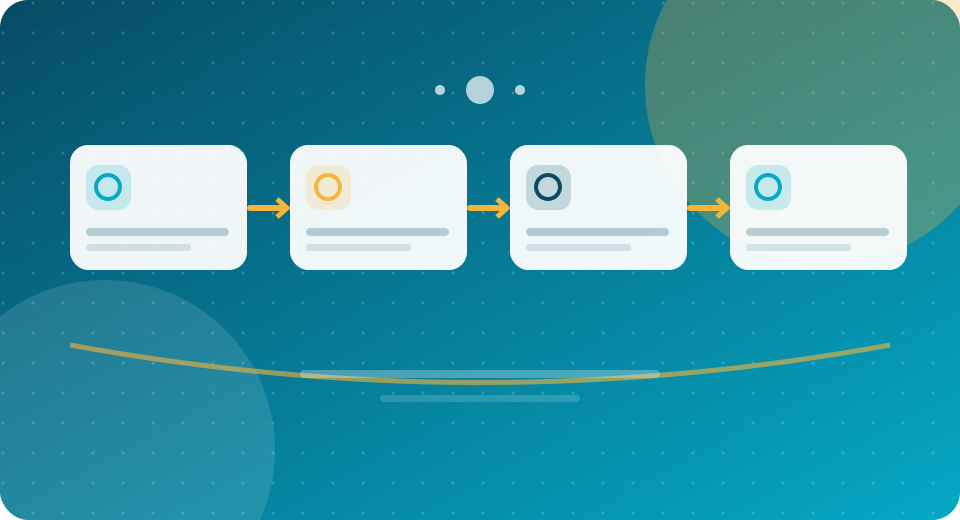

Component boundaries, data flows, security responsibilities and integration contracts determine how safely an application can grow. Map business domains into services, interfaces and data boundaries; document which components must remain independent.
Map business domains into services, interfaces and data boundaries; document which components must remain independent.
Establish ownership, testing boundaries and measurable performance targets before development.
Technology decisions should improve day-to-day work, strengthen data reliability and support measurable business outcomes.
Separate customer, finance and operations responsibilities so changes remain predictable
Define versioned APIs, event payloads and failure behaviour before teams build against them
Set measurable availability, latency, security and maintainability targets
Document decisions, dependencies and technical trade-offs for future teams
A simplified reference flow, adapted to the actual project requirements:
Illustrative architecture, not a claim of an existing deployed installation.
Depending on business requirements, solutions may be designed using relevant industry technologies and architectural patterns:
These are recognised industry technologies and architectural approaches that may be evaluated for a project; their mention does not imply Core1 Solutions has deployed, certified, partnered with, or currently supports every named technology.
Different sectors apply the same technical foundations to different operational challenges.
separate orders, stock and customer records for scalable store operations
connect scheduling, billing and patient administration with appropriate access boundaries
structure production, purchasing and finance functions into maintainable services
Review users, processes, existing systems, constraints and priorities.
Architecture review, dependency mapping, interface definitions and a phased technical blueprint.
Test security, data integrity, performance and real-world workflows.
Document ownership, support needs and continuous improvements.
Review change frequency, critical dependencies, incident history and the cost of incremental improvements before choosing a path.
No. A well-structured modular application is often easier to operate; distribution is justified only by clear scaling or organisational needs.
A practical set of system boundaries, diagrams, interfaces, security controls, operational assumptions and staged delivery decisions.
See how this capability can complement Core1ERP, business applications and professional services.
Tell Core1 Solutions about your environment, requirements and business goals.
Request a consultation →